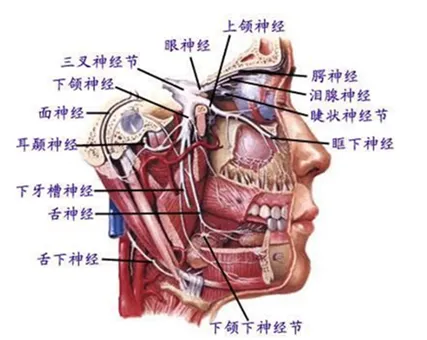
Imagine un dolor tan intenso que ha sido calificado de« enfermedad del suicidio »— una afección en la que incluso el más leve roce en el rostro, una brisa suave o el simple acto de cepillarse los dientes puede desencadenar una sensación de agonía similar a un choque eléctrico. Esta es la realidad diaria de millones de personas en todo el mundo que viven conneuralgia del trigémino (TN), un trastorno doloroso crónico que afecta al nervio trigémino — el quinto y mayor nervio craneal del cuerpo humano.
Durante décadas, la escalera de tratamiento estándar ha sido la medicación (con rendimientos decrecientes y efectos secundarios crecientes), seguida de procedimientos quirúrgicos invasivos que conllevan riesgos significativos. Pero en el Guangzhou Concord Cancer Center (GCCC), una solución avanzada no invasiva está cambiando la ecuación:radiocirugía Gamma Knife.
¿Qué es la neuralgia del trigémino?
Neuralgia del trigémino — conocida históricamente comotic douloureux— es una afección dolorosa crónica que afecta al nervio trigémino, el cual lleva la sensación del rostro al cerebro. El nervio se divide en tres ramas:
- Rama oftálmica (V1)— frente, párpado superior y cuero cabelludo
- Rama maxilar (V2)— párpado inferior, mejilla, orificio nasal, labio superior y encía superior
- Rama mandibular (V3)— labio inferior, encía inferior, mandíbula y músculos de la masticación

La neuralgia del trigémino afecta predominantemente a poblaciones de mediana edad y ancianos, con una proporción mujer-hombre de aproximadamente 3:2 y una edad promedio de inicio de 53 a 57 años.
A nivel mundial, la incidencia anual de la neuralgia del trigémino es aproximadamente4 a 5 por 100 000personas, lo que la convierte en una de las formas más severas de dolor neuropático conocidas en medicina. Los ataques de dolor son característicamente súbitos, severos y breves — descritos por los pacientes como una sensación dedescargas eléctricas, puñaladas o sensaciones de quemazónque duran desde unos pocos segundos hasta varios minutos.
Lo que hace que esta enfermedad sea especialmente cruel es la presencia dezonas desencadenantes— pequeñas áreas alrededor de la boca, la nariz o la mejilla donde incluso la estimulación más leve puede provocar un ataque intenso. Con el tiempo, los pacientes empiezan a evitar actividades diarias esenciales como comer, beber, hablar y la higiene bucal por miedo a desencadenar el dolor. En casos avanzados,depresión grave e ideación suicidano son infrecuentes.
Las cuatro vías de tratamiento: una comparación
1. Medicación (primera línea, pero no una cura)
La primera línea de defensa implica típicamente medicamentos anticonvulsivos tales comocarbamazepine, oxcarbazepine, gabapentin, and pregabalinEstos fármacos actúan suprimiendo las descargas eléctricas dentro del nervio trigémino. Sin embargo, la medicaciónno puede curar la neuralgia del trigémino— solo maneja los síntomas. A medida que la enfermedad progresa, se requieren dosis más altas, lo que lleva a efectos secundarios crecientes que incluyen mareos, fatiga, toxicidad hepática y deterioro cognitivo. La resistencia a los fármacos finalmente se desarrolla en muchos pacientes.
2. Ablación nerviosa (procedimientos destructivos)
Técnicas que incluyen termocoagulación por radiofrecuencia, inyección de glicerol y compresión con balón del ganglio trigémino deliberadamentedestruyen las fibras nerviosaspara bloquear las señales de dolor. Aunque eficaces a corto plazo, estos procedimientos conllevan riesgos de adormecimiento facial permanente, pérdida sensorial, anestesia corneal y debilidad mandibular. El procedimiento en sí puede ser doloroso, y las complicaciones a menudo afectan permanentemente la calidad de vida.
3. Descompresión microvascular (MVD — la cirugía abierta)
La MVD implica una craneotomía (apertura del cráneo) para separar un vaso sanguíneo que comprime la raíz del nervio trigémino. Aunque puede proporcionar alivio duradero a pacientes con compresión vascular confirmada,solo funciona en casos de conflicto neurovascular— no para la neuralgia del trigémino idiopática o secundaria. Como procedimiento neuroquirúrgico mayor bajo anestesia general, conlleva los riesgos inherentes de la craneotomía, incluyendo infección, fuga de líquido cefalorraquídeo, accidente cerebrovascular y pérdida auditiva.
💡 La brecha de tratamiento
Muchos pacientes — especialmente los ancianos, aquellos con múltiples comorbilidades, o aquellos para quienes la medicación ha fallado — se encuentran atrapados entre una medicación insuficiente y un riesgo quirúrgico inaceptable.Es precisamente aquí donde la radiocirugía Gamma Knife cierra la brecha.
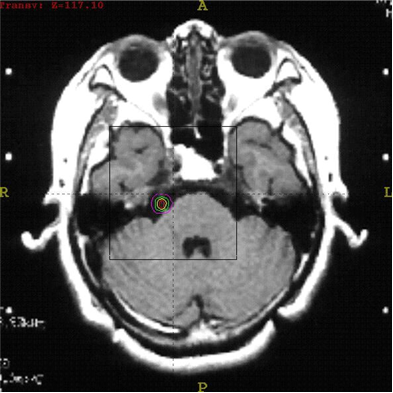
La imagen por resonancia magnética previa al tratamiento es esencial para identificar el punto objetivo en el nervio trigémino. La precisión de la radiocirugía Gamma Knife depende de una localización precisa mediante guía de resonancia magnética estereotáctica.
4. Radiocirugía Gamma Knife (precisión no invasiva)
El tratamiento con Gamma Knife representa un enfoque fundamentalmente diferente. En lugar de cortar o destruir grandes secciones del nervio, administrahaces de radiación gamma enfocados con precisióna un punto específico en la raíz del nervio trigémino, interrumpiendo selectivamente las fibras conductoras del dolor mientras se preservan el tacto y la función motora.
La ciencia detrás de esta selectividad radica en la biología de las fibras nerviosas. El nervio trigémino contiene diferentes tipos de fibras nerviosas, cada una con sensibilidad variable a la radiación:
- Aδ fibers(dolor y temperatura) — el diámetro más delgado y la vaina de mielina más fina,la más radiosensible
- Aβ fibers(tacto ligero) — mielina más gruesa,más resistente a la radiación
- Fibras motoras(músculos de la masticación) — la más gruesa,la más resistente a la radiación
Esta diferencia biológica permite a Gamma Knife lograr lo que la cirugía no puede:alivio del dolor selectivo sin daño colaterala la sensación táctil o la función motora.
Una breve historia: de Leksell a hoy
El concepto de tratar la neuralgia del trigémino con radiación se remonta a1953, cuando el neurocirujano suecoProfessor Lars Leksellrealizó la primera radiocirugía estereotáctica del mundo en dos pacientes con neuralgia del trigémino utilizando rayos X de ortovoltaje dirigidos al ganglio trigémino. Ambos pacientes experimentaron grados variables de alivio del dolor — una observación que eventualmente llevaría a una de las soluciones más elegantes de la neurocirugía funcional.
Con la invención del primer Gamma Knife en1967y los avances posteriores en tecnología informática e imagen médica, Gamma Knife ha evolucionado hacia un sistema de tratamiento totalmente digitalizado, automatizado e inteligente. Utilizandomúltiples fuentes cobalt-60precisamente enfocadas en un objetivo estereotáctico, Gamma Knife logra una precisión sub-milimétrica — un nivel de precisión sin igual por ninguna otra plataforma de administración de radiación.
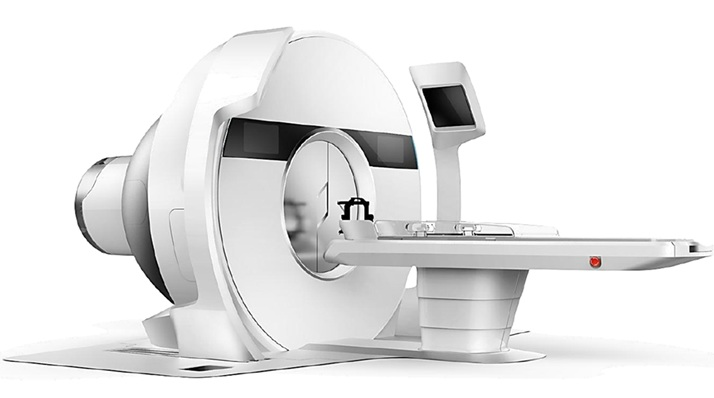
El sistema de radiocirugía Gamma Knife utiliza múltiples fuentes cobalt-60 enfocadas con precisión sub-milimétrica en la raíz del nervio trigémino, administrando una dosis única alta de radiación para bloquear las señales de dolor mientras se respetan los tejidos sanos circundantes.
Eficacia clínica: lo que muestran los datos
La radiocirugía Gamma Knife para la neuralgia del trigémino está respaldada por décadas de investigación clínica y experiencia en el mundo real. La evidencia es convincente:
Según el estudio histórico publicado enInternational Journal of Radiation Oncology • Biology • Physics(2011), que siguió556 pacientesdurante una mediana de10 añosla radiocirugía Gamma Knife proporciona alivio del dolor duradero con un excelente perfil de seguridad.
La ventaja más importante del tratamiento con Gamma Knife es que permite a los pacientes evitar la craneotomía y los riesgos asociados de la anestesia general, mientras se logra aún un alivio del dolor significativo y duradero.
Es importante tener en cuenta que los resultados no son inmediatos. El inicio del alivio del dolor varía individualmente — algunos pacientes experimentan alivio en pocas horas, mientras que otros pueden tardar hasta un año. Sin embargo, ella mayoría de los pacientes (de 3 semanas a 3 meses)empiezan a notar mejoras dentro de esta ventana. Durante este periodo de espera, los pacientes pueden continuar tomando sus medicamentos recetados hasta que el tratamiento tenga efecto completo.
El proceso de tratamiento con Gamma Knife en GCCC
Todo el procedimiento, desde la colocación del marco hasta la finalización, toma aproximadamente3 a 4 horase incluye cinco pasos bien establecidos:
- Colocación del marco estereotáctico— Un armazón craneal estereotáctico ligero se fija al cráneo del paciente bajo anestesia local, proporcionando un sistema de coordenadas de referencia fijo para el objetivo sub-milimétrico.
- Exploración de localización por resonancia magnética— Se realiza una resonancia magnética de alta resolución con el marco colocado para identificar con precisión la raíz del nervio trigémino.
- Planificación del tratamiento— Un equipo de neurocirujanos, radiooncólogos y físicos médicos diseña de forma colaborativa un plan de dosis personalizado, determinando la dosis de radiación exacta y la configuración del objetivo para obtener resultados óptimos.
- Administración del tratamiento— El paciente se acuesta en la camilla de tratamiento mientras el sistema Gamma Knife posiciona y administra automáticamente la dosis de radiación. Todo el proceso se monitorea en tiempo real.
- Retiro del marco— Después del tratamiento, se retira el marco estereotáctico y se vendan los pequeños sitios de los pernos. Los pacientes pueden reanudar normalmente sus actividades en un plazo de 24 horas.
Perfil de seguridad y efectos secundarios
La radiocirugía Gamma Knife tiene un perfil de seguridad bien caracterizado y generalmente favorable. El efecto secundario potencial más notable esadormecimiento facial leveen el lado tratado, que ocurre en una minoría de pacientes. En la mayoría de los casos, este cambio sensorial:
- Es leve y no impacta significativamente la vida diaria
- Tiende a disminuir o resolverse con el tiempo
- Se considera generalmente un compromiso aceptable a cambio de libertad del dolor debilitante
En raras ocasiones, puede aparecer un entumecimiento más persistente o complicaciones corneales (queratitis). Sin embargo, las técnicas modernas de optimización de dosis han reducido drásticamente la incidencia de efectos secundarios graves. La mayoría de los pacientes describen la experiencia de tratamiento como cómoda, con algunos mareos transitorios o náuseas atribuibles en gran parte a la ansiedad previa al procedimiento en lugar del tratamiento en sí.
¿Quién es un candidato ideal?
La radiocirugía Gamma Knife es particularmente adecuada para:
- Pacientes de edad avanzadao aquellos con comorbilidades significativas que no pueden someterse a una craneotomía de forma segura
- Pacientes con dolor resistente a los medicamentosque no pueden tolerar dosis de fármacos crecientes o efectos secundarios
- Pacientes con neuralgia del trigémino idiopática(sin compresión vascular clara en la imagen)
- Pacientes con dolor recurrentedespués de intervenciones quirúrgicas previas
- Pacientes con neuralgia del trigémino bilateralo TN relacionada con la esclerosis múltiple
Es esencial que los pacientes se sometan a una evaluación integral — incluyendo resonancia magnética de alta resolución — para excluir causas secundarias como tumores o esclerosis múltiple antes de proceder con el tratamiento.
Después del tratamiento: qué esperar
La recuperación tras Gamma Knife es notablemente sencilla en comparación con la cirugía abierta. No se requiere estancia hospitalaria para la radiocirugía en sí, y los pacientes deben:
- Mantener un horario de sueño regular y priorizar el descanso
- Evitar o minimizar los desencadenantes de dolor conocidos durante el periodo de inicio
- Continuar los medicamentos recetados según sea necesario hasta que el efecto del tratamiento se manifieste por completo
- Asistir a las citas de seguimiento programadas para monitoreo
Si el dolor persiste durante el periodo de inicio, los pacientes pueden continuar los medicamentos o recibir bloqueos nerviosos locales para alivio temporal hasta que el efecto Gamma Knife se establezca.
🌟 Consulte a un especialista en Gamma Knife en GCCC
Ya sea que esté considerando Gamma Knife para la neuralgia del trigémino o explorando opciones de tratamiento para un ser querido, nuestro equipo multidisciplinario de neurocirujanos y radiooncólogos está listo para proporcionar una evaluación personalizada.
Solicitar una consultaAutor:Dr. Liu Qiyong |Revisado por :Prof. Qian Chaonan |Publicado por:Guangzhou Concord Cancer Center, 17 de abril de 2026
Apoyado por: China Anti-Cancer Association (CACA) — Base de Formación Clínica para Oncología Integrada, Base de Formación en Prevención y Detección del Cáncer, y Base de Transformación de Investigación Clínica.