
Breast cancer is among the most common malignancies in women, ranking high in both incidence and mortality. In recent years, small-molecule tyrosine kinase inhibitors (TKIs) targeting human epidermal growth factor receptor 2 (HER2) — such as neratinib and pyrotinib — have significantly improved the prognosis of patients with HER2-positive breast cancer. As these drugs are used more widely, their adverse effects have drawn increasing attention, including diarrhoea, drug-induced liver injury, nausea and vomiting, with diarrhoea being the most common. Effective diarrhoea management is therefore essential to improve adherence and quality of life and to preserve treatment efficacy.
01 Why HER2-Targeted "Tinib" Drugs Cause Diarrhoea
The human epidermal growth factor receptor (HER) family plays a central role in the development and progression of cancer and is one of the most extensively studied targets in oncology. Activation of HER signalling promotes tumour cell survival, metabolism and proliferation. Anti-HER2 TKI drugs act on the intracellular kinase domains of receptors such as HER2 and EGFR (epidermal growth factor receptor, also known as HER1/ErbB1), interfering with intracellular signalling to exert their anti-tumour effect.
However, EGFR is not expressed only in cancer cells — it is also abundant in healthy intestinal epithelial cells. The exact mechanism by which these drugs cause diarrhoea is not fully understood, but related studies suggest it may involve drug-induced inflammatory injury to the intestinal mucosa and increased hypertonic chloride secretion.
02 How to Tell If It Is Drug-Related Diarrhoea, and How Severe Is It?
First step: is it drug-related?
After starting anti-HER2 TKI therapy, the following signs should raise suspicion of drug-related diarrhoea: bowel movements significantly more frequent than usual (more than three per day); loose, watery stools with increased water content (above 85%); and stools containing mucus or undigested food.
Diarrhoea has many causes. Besides medication, it may be related to unhygienic food, intestinal infection or other concurrent drugs. A single episode of diarrhoea is not enough to draw a conclusion. Please contact your doctor promptly: they will make a comprehensive diagnosis based on the timing of medication, characteristics of the symptoms, accompanying signs and, where necessary, stool tests, blood counts and electrolyte tests. If diarrhoea is accompanied by fever, blood in the stool, severe abdominal pain, marked dehydration or altered consciousness, seek medical attention promptly to rule out infection or other serious conditions.
Second step: how severe is it?
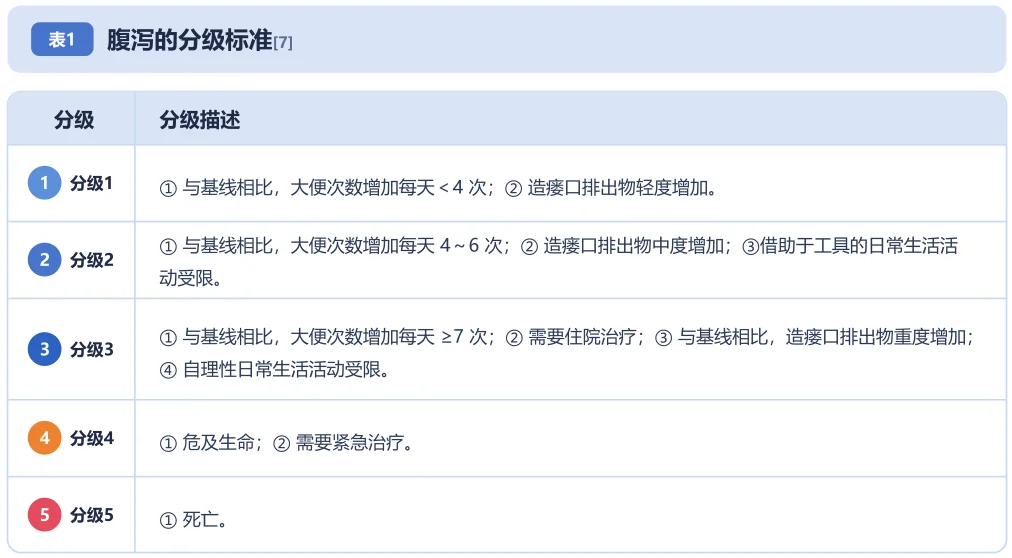
Once drug-related diarrhoea is confirmed or strongly suspected, its severity should be assessed. The Common Terminology Criteria for Adverse Events (CTCAE) version 5.0, issued by the US National Cancer Institute, can be used to grade diarrhoea, as shown in Table 1.
03 What to Do When Diarrhoea Occurs
For mild symptoms (grade 1–2 diarrhoea with no other complications), the available measures include dietary adjustment, oral rehydration support and anti-diarrhoeal treatment. Loperamide may be started at an initial dose of 4 mg, followed by 2 mg after each loose stool. If there is no improvement after 24 hours of treatment, the dose may be adjusted according to severity: grade 1 patients may take 2 mg every 4 hours, and grade 2 patients 2 mg every 2 hours. Note that the maximum daily dose of loperamide is 16 mg.
If symptoms still do not improve after these measures, consult your doctor promptly. For grade 3 or higher diarrhoea, blood in the stool, fever, marked dehydration or altered consciousness, seek medical attention as soon as possible.
04 Can Diarrhoea Be Prevented Before Starting Treatment?
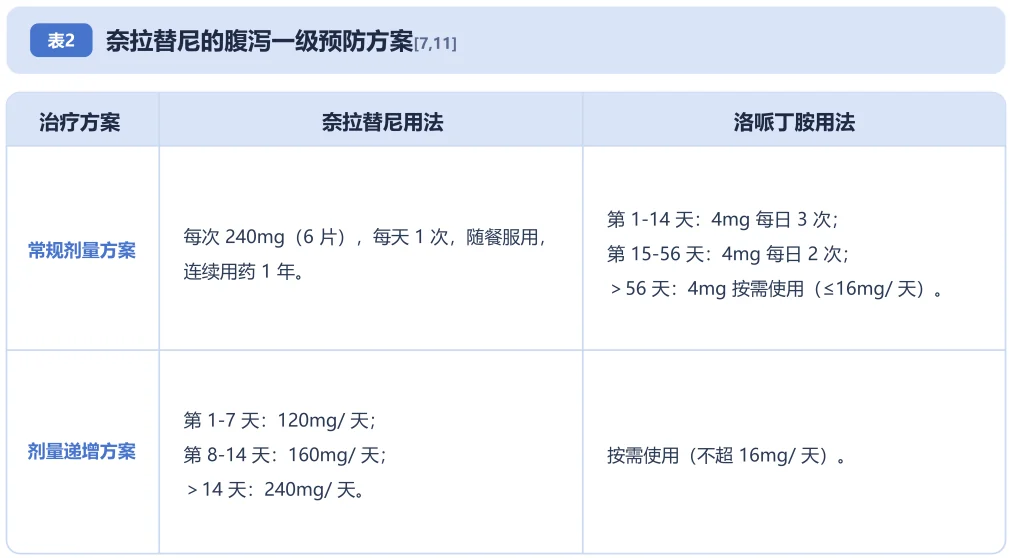
The incidence of diarrhoea varies between drugs. Tucatinib and lapatinib have relatively low rates and generally do not require primary prophylaxis with anti-diarrhoeal medication. With neratinib and pyrotinib, loperamide may be considered for primary prevention. For neratinib, in addition to the standard dosing schedule, a two-week dose-escalation schedule or loperamide primary prophylaxis is recommended to reduce the incidence of diarrhoea, as shown in Table 2.
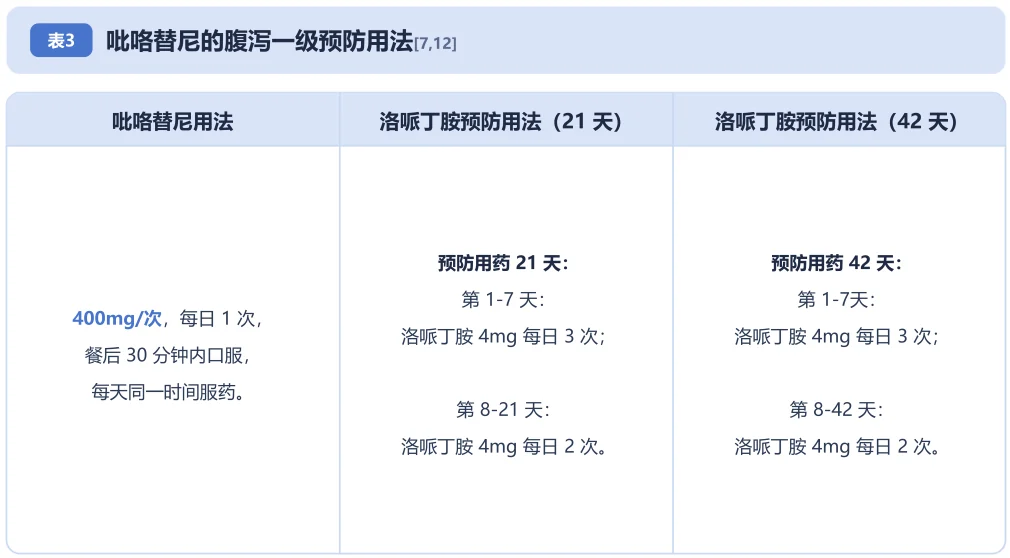
With pyrotinib, loperamide may be considered for primary diarrhoea prophylaxis, as shown in Table 3.
05 Summary: Diarrhoea Is Preventable and Controllable
Overall, diarrhoea caused by HER2-targeted "tinib" drugs is preventable and controllable. Recent research suggests that, among patients with HER2-positive breast cancer treated with pyrotinib, the occurrence of diarrhoea is independently associated with longer overall survival — hinting that this side effect may be a signal of therapeutic effect. If diarrhoea occurs while taking these medicines, there is no need for excessive worry: reach out to your healthcare team promptly and manage the symptom in a targeted way. This will help you stay comfortable and continue treatment smoothly.
Written by Wu Xiaozhe of the Department of Pharmacy. Medically reviewed by Chen Qian of the Department of Pharmacy and the Medical Affairs Department, Guangzhou Concord Cancer Center.