Anti-angiogenic therapy was originally designed to cut off a tumour's blood supply and "starve" it, but as a single agent its efficacy is limited and tumours can escape through multiple mechanisms. This dilemma has prompted the field to rethink where anti-angiogenic drugs should be positioned clinically.
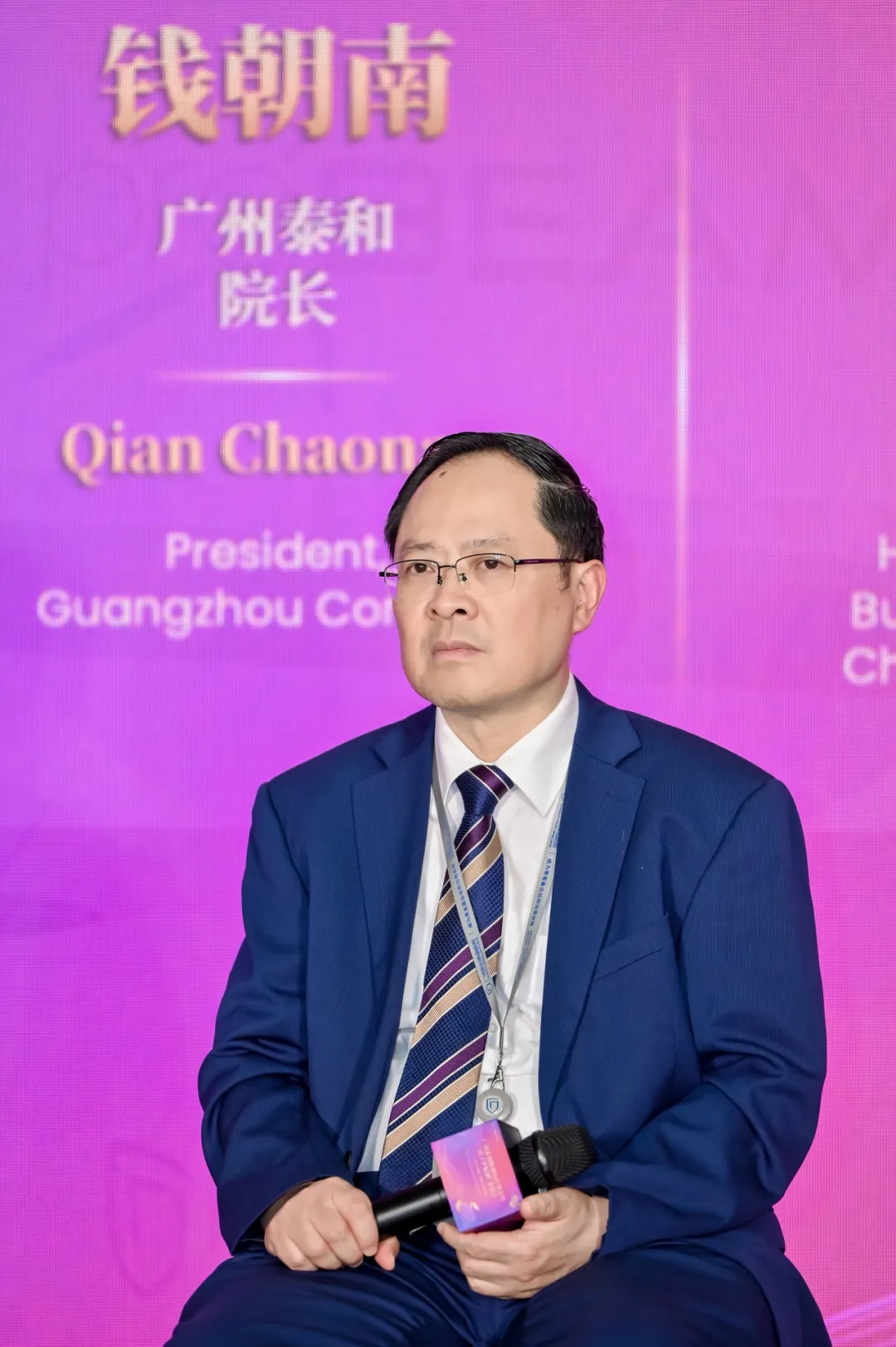
At the 29th annual meeting of the Chinese Society of Clinical Oncology (CSCO), Prof. Qian Chaonan, President of Guangzhou Concord Cancer Center, gave an interview to China Health Television (CHTV), the public-health channel of China's National Health Commission. He noted that the true value of anti-angiogenic therapy lies not in destroying every tumour vessel, but in improving drug delivery through vascular normalisation. He identified a future research priority: blocking cancer cells from entering the bloodstream via high endothelial venules, opening a new path for anti-metastatic treatment.
From updated thinking on vascular normalisation and the tumour microenvironment, to new ideas on preventing metastasis and radiation encephalopathy in nasopharyngeal cancer, and to a reasoned view of the limits of AI in predicting organ-specific metastasis, Prof. Qian has built a research philosophy that runs "from the laboratory to the bedside" — responding to and moving beyond the original idea of "starving the tumour."
01 Vascular Normalisation: From "Starving the Tumour" to "Opening a Channel"
Early research assumed that tumour growth depends heavily on the tumour vascular system, and that blocking its construction would inhibit growth and metastasis. But Prof. Qian points out that, as research has deepened, the ways tumours build blood vessels are far more complex than imagined. Beyond growing new microvessels, tumours can "rob" or "hijack" surrounding normal vessels for their own use — a phenomenon known as vessel co-option, which has been recognised for more than a decade. For this reason, completely cutting off a tumour's blood supply is difficult; the development of anti-angiogenic drugs has also shown from another angle that eliminating every vessel inside a tumour is almost impossible.
VEGF inhibitors may nevertheless suppress the chaotic small vessels induced by tumour cells (angiogenesis), producing "vascular normalisation": clearing inefficient small vessels while leaving functional larger vessels to pass through the tumour tissue. Blood-flow efficiency then improves, potentially delivering more drug to the tumour site; study data have confirmed that vascular normalisation helps improve drug delivery.
More importantly, systemic dissemination is the main reason most cancer treatments fail, and dissemination depends heavily on cancer cells entering the bloodstream. Prof. Qian emphasises that after entering lymph nodes, cancer cells can use a specialised vessel — the high endothelial venule (HEV) — to enter the circulation and spread distantly. This gives rise to a future basic-research direction for anti-angiogenic therapy: intervening in the remodelling of high endothelial venules and blocking cancer cells from entering the bloodstream, offering a new anti-metastatic strategy. The clinical implication is clear: for cases with a stronger tendency to metastasise distantly, blocking entry into the circulation early should ultimately bring benefit — and nasopharyngeal cancer is a representative example.
02 The "Two Fronts" of Nasopharyngeal Cancer: Anti-Metastasis and Radiation Brain Injury
Nasopharyngeal cancer is among the most aggressive and frequently metastasising head-and-neck epithelial tumours, with distant metastasis — not local recurrence — as the leading cause of treatment failure. It is sensitive to both chemotherapy and radiotherapy, yet its anatomical location is special: centred in the skull and surrounded by the central nervous system, cranial nerves and major vessels, with many dose-limiting organs close by. Toxicity was once the main constraint on efficacy.
With intensity-modulated radiotherapy — especially intensity-modulated proton therapy (IMPT) — local control has improved significantly and radiation dose to surrounding organs has fallen sharply. As a result, the efficacy bottleneck in nasopharyngeal cancer has long shifted from "poor local control" to "unable to prevent distant metastasis," making the prevention and treatment of distant metastasis an important front in comprehensive care.
Prof. Qian cautions that this does not relegate drug therapy to second place. Because some nasopharyngeal cancers metastasise very early, anti-metastatic treatment remains an important clinical task. Although current anti-metastatic drugs have limited efficacy, more will be developed for use in comprehensive treatment. Nasopharyngeal cancer is an ideal disease in which to pursue the broader goal of "treating the local tumour while preventing distant metastasis."
On radiation brain injury, Prof. Qian notes that radiation damage — especially to the brain — disrupts the vascular system, injures the blood-brain barrier and causes fluid leakage and cerebral oedema; essentially, the permeability of brain capillaries increases. VEGF plays an important role in this process, so VEGF receptor inhibitors may also help prevent and treat radiation encephalopathy. This extends the value of anti-angiogenic drugs from "fighting the tumour" to "preventing and treating treatment-related injury," opening new thinking about quality of life for patients with nasopharyngeal cancer.
03 What Basic Research Has Not Yet Solved
Once metastasis occurs, which organ will the cancer prefer, and can this be predicted before it appears? Prof. Qian is direct: "We know that triple-negative breast cancer is more likely to metastasise distantly, but which organ it reaches first — we still cannot predict accurately." In his view, basic research has not yet fully understood which molecular mechanisms regulate the selectivity of metastasis to distant organs.
Can AI fill this gap? His answer is equally direct: "No." His reasoning: AI can only analyse existing data, and if there are still large gaps in basic theory and unknown molecular mechanisms behind the organ preference of breast cancer metastasis, then there is very little AI can do.
He adds, however, that if we could accurately predict which organ breast cancer cells are about to metastasise to, we could intervene earlier. Behind this "if" lies a clear scientific goal — the discovery and validation of pre-metastatic niche biomarkers, which depends on further breakthroughs in basic research. From raising questions to defining limits and looking ahead, Prof. Qian's responses reflect a normal cycle of academic progress: not evading the unknown, not overstating tools, but keeping his eyes on the goal worth pursuing.
04 Conclusion
From vessel co-option to HEV channels, from preventing radiation encephalopathy to developing new anti-metastatic drugs, Prof. Qian's interview traces a logical chain from molecular mechanisms to clinical strategy. We need to track every detail of immune escape in the laboratory, and we also need to ask at the bedside how these discoveries can truly change patient outcomes. From clinical challenges to uncovering molecular mechanisms and developing new drugs, and then to exploring the new problems that arise under those therapies — this cycle, repeated again and again, is the broad road of medical progress.
Interview conducted at the 29th CSCO Annual Meeting. Source references available on request.