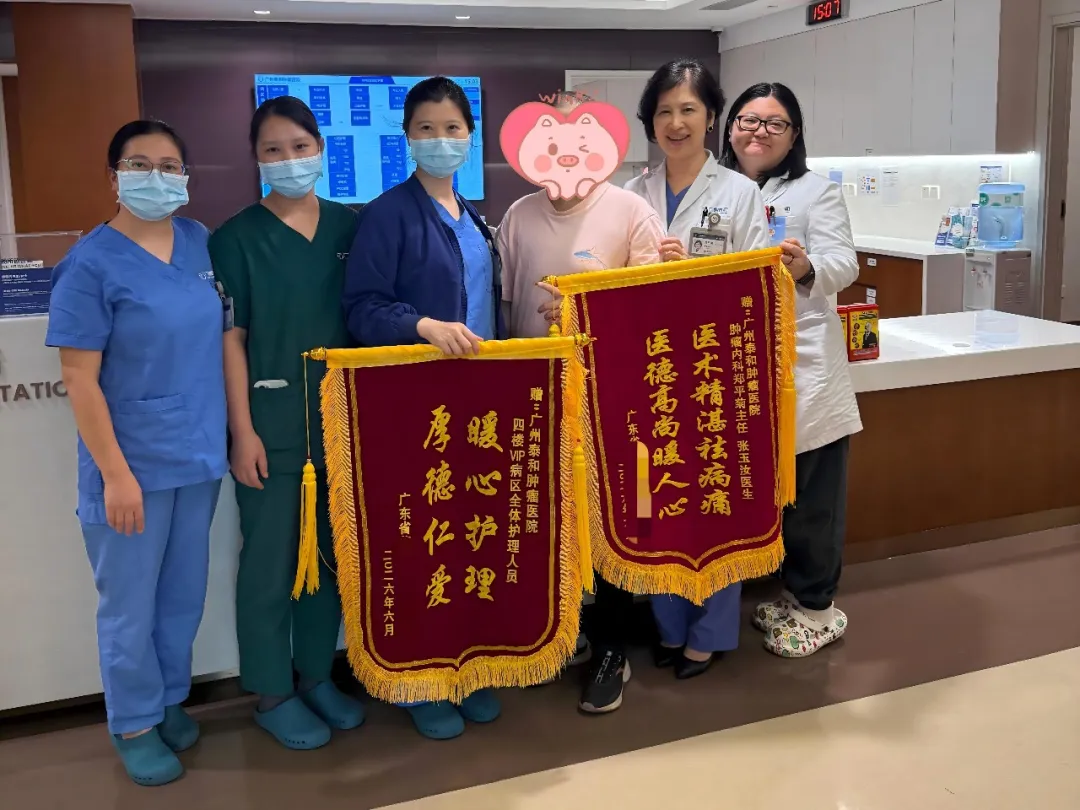
The patient presents thank-you flags to the GCCC oncology and nursing team after completing treatment
On the day of admission, Ms. Liu (pseudonym), a patient with advanced breast cancer, was wheeled into Guangzhou Concord Cancer Center (GCCC) in a wheelchair. She was in severe pain all over her body, both breasts were ulcerated and draining, and her chest wall had extensive skin damage. When she left, she walked out of the inpatient building steadily on her own and personally handed two thank-you flags to the medical team: one read "Skilled medicine removes pain, noble ethics warm the heart"; the other read "Great kindness and love, warm-hearted care."
From wheelchair to walking, from oozing wounds to healed skin, and from tumor markers off the charts to levels within the normal range — what kind of treatment process made this possible?
Case Review: Three Subtypes, Advanced at Diagnosis
The patient was diagnosed with bilateral primary invasive breast cancer, already at stage IV at first diagnosis. The cancer had spread extensively to the brain, both lungs, multiple bones, regional lymph nodes, and the chest wall, so radical surgery was no longer an option.
The breast lesions simultaneously showed three molecular subtypes: triple-negative, HER2-overexpressing, and Luminal B. The tumor proliferative activity was extremely high, with Ki67 up to 80%. This is a typical case of heterogeneous advanced breast cancer as described in the Chinese Guidelines for Standardized Diagnosis and Treatment of Advanced Breast Cancer (2024 Edition).
Initial tumor markers were severely elevated: CA15-3 reached 333.1 U/mL (reference range 0–31.3 U/mL), and CA125 soared to 12,830 U/mL (reference range 0–35 U/mL). Multiple tumor lesions were metabolically active throughout the body. Both breasts had ulcerated, bleeding, and draining masses with extensive chest wall skin damage, persistent whole-body pain, and complete dependence on a wheelchair for daily mobility.
The Full Treatment Journey: Personalized, Multidisciplinary, Layered Care
Care was guided by the Chinese Society of Clinical Oncology (CSCO) Breast Cancer Diagnosis and Treatment Guidelines 2024 and 2026.
1. Personalized Anticancer Therapy and Systematic Symptom Management
The multidisciplinary team (MDT) designed a sequential, layered treatment plan to simultaneously suppress the triple-negative, HER2-positive, and hormone-receptor-positive disease components. For patients with multiple primary lesions and multiple molecular subtypes of advanced breast cancer, MDT-based sequential stratification is essential. The plan integrated chemotherapy, anti-HER2 targeted therapy, endocrine therapy, antibody–drug conjugates (ADCs), and proton radiotherapy to control both distant metastases and local breast disease.
2. Proton Radiotherapy to Clear Local Disease While Protecting the Heart and Lungs
The patient received two courses of radiotherapy. The first was whole-brain palliative radiotherapy to control intracranial metastases. The second was proton therapy.
Because the patient had large bilateral breast tumors with extensive axillary and supraclavicular lymph-node involvement, wide-area irradiation of the chest wall and lymphatic drainage regions was needed. Conventional radiotherapy would have easily damaged the heart and lungs, so proton therapy was the clear choice.
The radiation oncology team delivered proton radiotherapy to the bilateral breasts, axillary levels I–III, and bilateral supraclavicular lymphatic drainage regions. Relying on the Bragg peak physical advantage of protons, the treatment fully covered the tumor target while greatly reducing radiation dose to the heart, lungs, and contralateral breast, reducing superimposed skin injury and controlling both the breast primary tumors and regional metastatic lymph nodes.
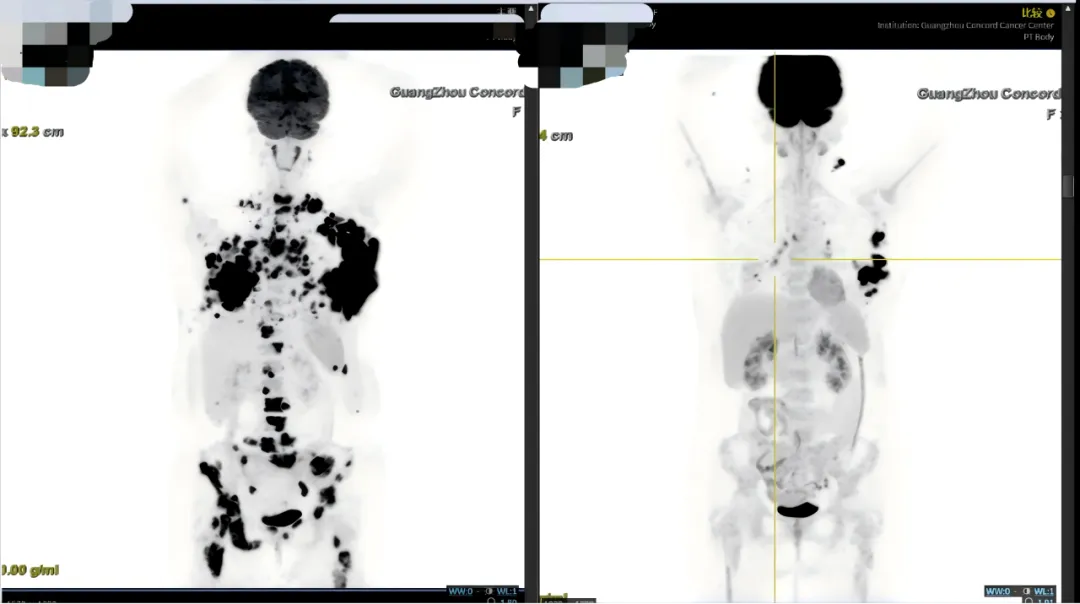
PET-CT comparison showing disease status before and after proton therapy
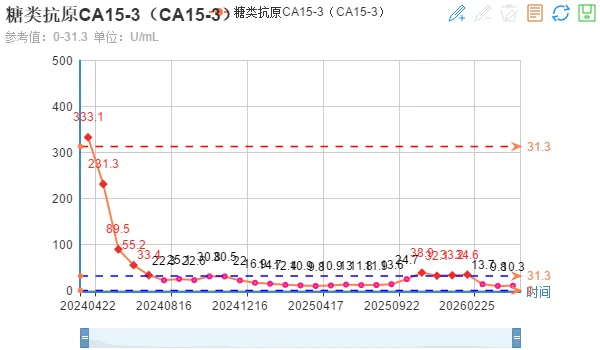
CA15-3 serum concentration trend (April 2024 – February 2026): from markedly elevated at diagnosis (333.1 U/mL) to within the normal range (10.3 U/mL)
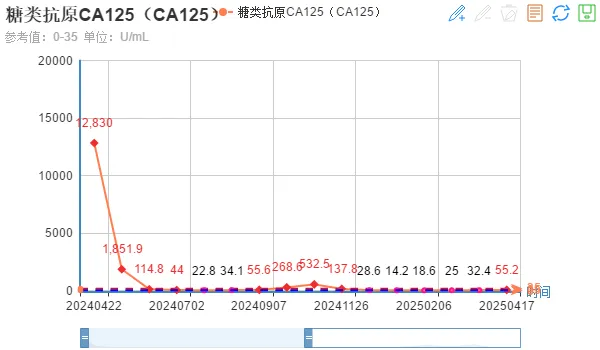
CA125 serum concentration trend (April 2024 – February 2026): from an extremely high initial value (12,830 U/mL) to a brief rebound at the end of 2025, then falling back to normal (13.7 U/mL) by February 2026
3. Wound Care and Anticancer Treatment Moving Forward Together
Standardized nursing care for the ulcerated breast tumors was carried out throughout the treatment course: daily gentle saline debridement, low-irritant iodine disinfection, alginate dressings to absorb exudate during the draining phase, weekly skin assessments during radiotherapy, and topical use of Bergman barrier film, epidermal growth factor spray, and vitamin B12 spray to prevent radiation dermatitis. Stepwise analgesia was used to relieve paroxysmal breast pain, and friction or irritation was strictly avoided. This allowed anticancer treatment and wound repair to proceed simultaneously.
Clinical photographs document the marked improvement:
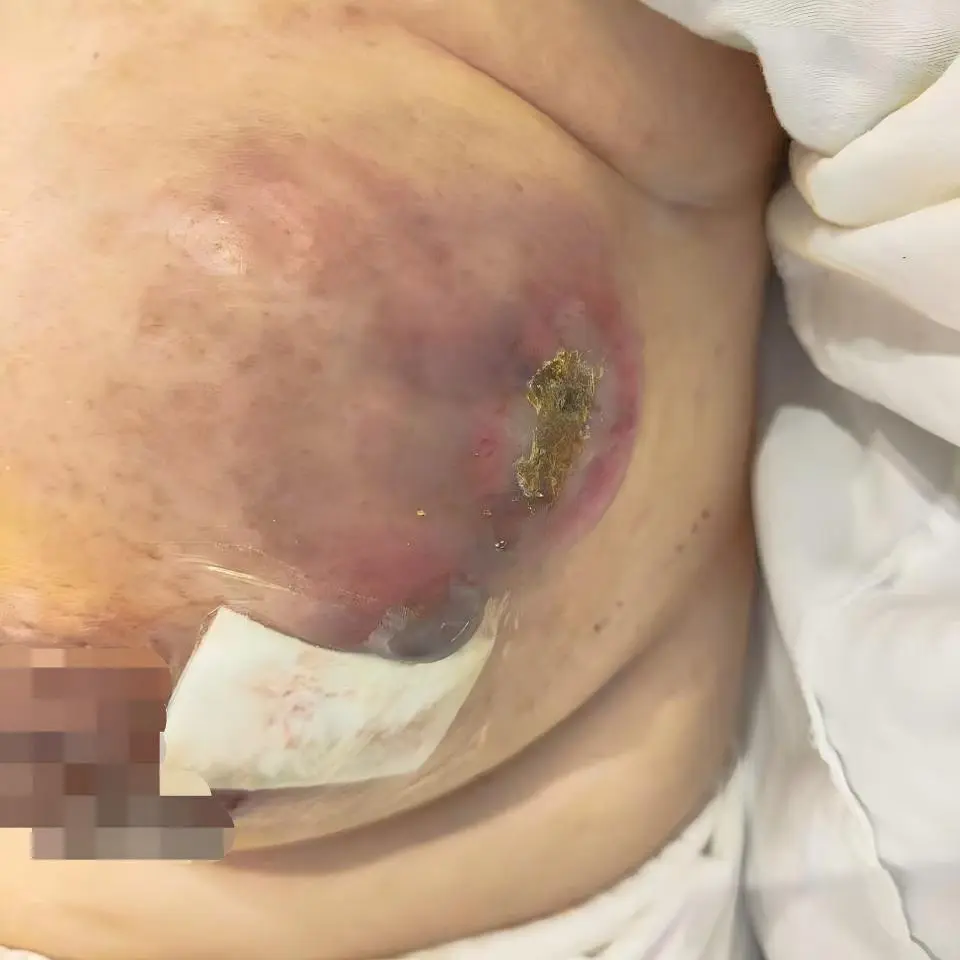
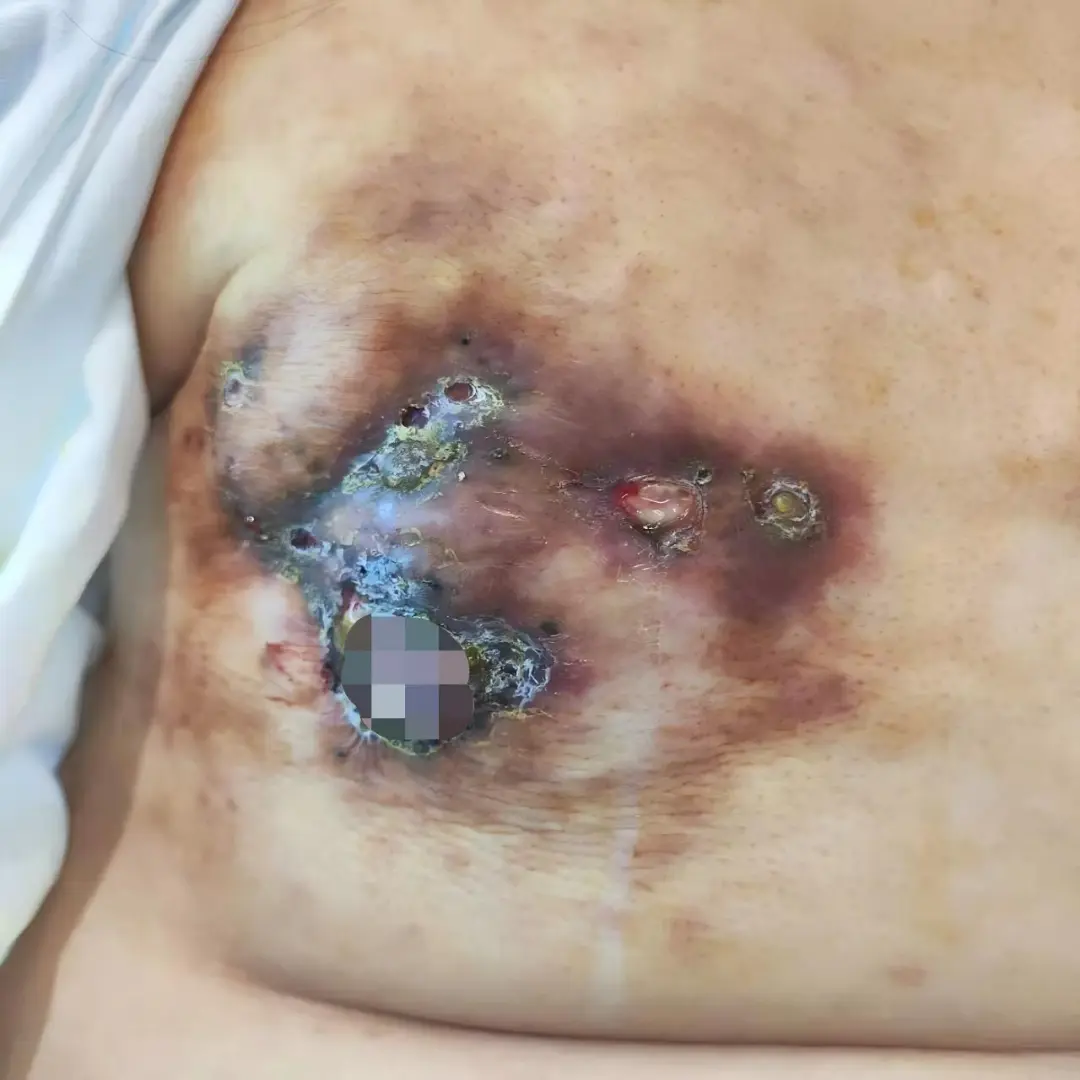
Before treatment: ulcerated primary breast lesions and extensive chest wall skin damage (right and left)
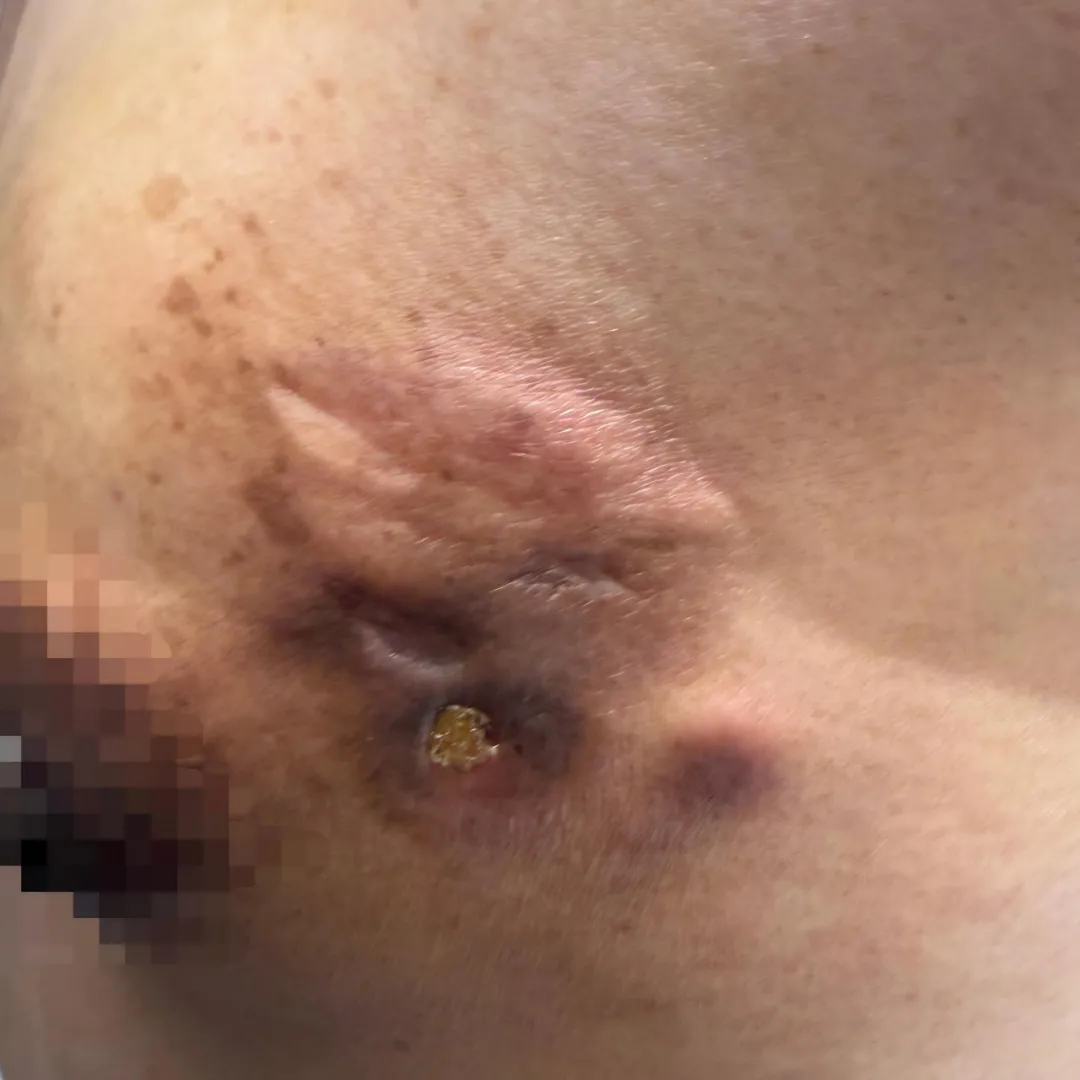
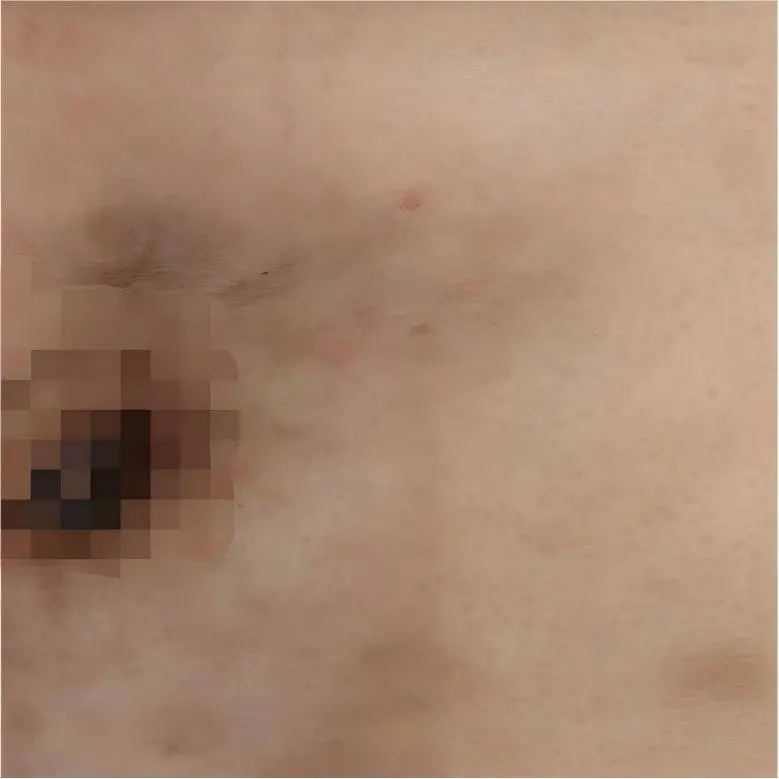
After treatment: wounds fully healed with only mild residual pigmentation, and chest wall rash largely resolved (right and left)
4. Full-Process Organ Function Monitoring to Safeguard Treatment
Before each treatment cycle, complete blood counts, biochemistry, echocardiography, and ECG were performed. Electrolytes such as potassium and sodium were monitored continuously. Mild anemia and hypokalemia were corrected promptly. The team proactively avoided risks such as syndrome of inappropriate antidiuretic hormone secretion (SIADH) and hyponatremic encephalopathy induced by chemotherapy, and monitored the QTc interval throughout to prevent cardiotoxicity from combined targeted therapy, chemotherapy, and radiotherapy.
Treatment Outcome: Partial Response, Blood Markers Back to Normal
After multidisciplinary comprehensive intervention, the patient's overall tumor burden was evaluated as partial response (PR) according to solid tumor response criteria.
Previously severely elevated tumor markers fell substantially and stabilized within the normal range: CA15-3 remained at 13.7–30.3 U/mL, and CA125 dropped to 27.3–55.2 U/mL.
The breast ulcer wounds gradually crusted and completely healed, with only mild residual pigmentation. The chest wall rash faded significantly. Bone pain was controlled smoothly with bone-protective agents and stepwise analgesia. The patient no longer depended on a wheelchair, could move independently, and showed marked improvement in mental state, appetite, and sleep. The core goal for advanced cancer patients — long-term survival with the tumor and improved quality of life — was achieved.
Key Elements of MDT Management for Advanced Breast Cancer
1. Heterogeneous advanced breast cancer requires MDT-based stratification.
The 2024 Chinese advanced breast cancer guidelines clearly state that multiple primary, multiple molecular-subtype advanced breast cancer must rely on MDT to develop sequential, layered plans integrating chemotherapy, anti-HER2 targeted therapy, endocrine therapy, ADCs, and proton radiotherapy to manage both distant metastases and local breast disease and avoid the limitations of any single approach.
2. Tumor-broken skin needs both anticancer therapy and specialized wound care.
For infiltrative breast tumor ulceration, systemic anticancer treatment and specialized wound care must proceed together. Before and after radiotherapy, skin barrier protection should be strengthened, and dressings should be adjusted according to the different stages of exudate, crusting, and pigmentation to reduce wound infection and pain and ensure that anticancer treatment can continue.
3. Adverse-event prevention should come before rescue.
Advanced breast cancer patients are prone to bone marrow suppression, electrolyte disturbances, and cardiotoxicity. Guidelines require routine laboratory re-evaluation every cycle, with early intervention for mild anemia and hypokalemia to avoid life-threatening complications such as hyponatremic encephalopathy and heart failure.
4. Multiple metastases require integrated whole-body and local control.
For HER2-positive advanced patients with brain and extensive bone metastases, guidelines recommend an integrated model of systemic targeted therapy + local radiotherapy + bone-modifying agents. ADCs such as T-DXd can suppress both intracranial and visceral metastases, while whole-brain radiotherapy and proton radiotherapy manage intracranial and breast-local disease respectively, effectively relieving pain and neurological compression and extending survival while improving quality of life.
From sitting hopelessly in a wheelchair at first diagnosis to now walking steadily out of the hospital, Ms. Liu's experience is not an isolated case. It confirms one fact: even when facing the complexity of bilateral primary breast cancer with three molecular subtypes and extensive distant metastases, standardized multidisciplinary stratified care integrating systemic therapy, precision radiotherapy, wound care, and full-process monitoring can still bring tumor regression, symptom relief, and significant improvement in quality of life.
The MDT team at Guangzhou Concord Cancer Center continues to follow evidence-based guidelines and a patient-centered approach, combining advanced treatment methods with meticulous management to bring hope of long-term survival to more patients with advanced breast cancer. The road against cancer is difficult, but scientific, standardized, and individualized comprehensive treatment always lets people see the light.
References
- National Cancer Quality Control Center Breast Cancer Expert Committee, Chinese Anti-Cancer Association Breast Cancer Professional Committee, Chinese Anti-Cancer Association Cancer Drug Clinical Research Professional Committee. Chinese Guidelines for Standardized Diagnosis and Treatment of Advanced Breast Cancer (2024 Edition) [J]. Chinese Journal of Oncology, 2024, 46(12): 1079. DOI: 10.3760/cma.j.cn112152-20241009-00435.
- Chinese Society of Clinical Oncology Guidelines Working Committee. Chinese Society of Clinical Oncology (CSCO) Breast Cancer Diagnosis and Treatment Guidelines 2024 [M]. Beijing: People's Medical Publishing House, 2024.
- Chinese Society of Clinical Oncology Guidelines Working Committee. Chinese Society of Clinical Oncology (CSCO) Breast Cancer Diagnosis and Treatment Guidelines 2026 [M]. Beijing: People's Medical Publishing House, 2026.
Plan your cross-border cancer care at GCCC
Our international patient team can review your records, coordinate travel and accommodation, and arrange a treatment plan at Guangzhou Concord Cancer Center.
Start Your Consultation